


 By
By Table of Contents
When I discovered hidden city ticketing three years ago, it completely transformed how I approach booking flights, saving me over $8,000 on airfare while navigating the complex ethical and practical considerations of this controversial strategy. Also known as skiplagging or throwaway ticketing, hidden city ticketing involves booking a flight with a layover in your actual destination city, then simply not taking the final segment—often resulting in savings of 50% or more compared to direct flights. While this practice isn’t illegal, it does violate most airlines’ contracts of carriage, creating a fascinating gray area that millions of savvy travelers navigate to access affordable air travel in an era of dynamic pricing and route monopolies.
Understanding Hidden City Ticketing: The Complete Picture

Hidden city ticketing works because of a peculiar quirk in airline pricing: flights with connections through major hubs are often cheaper than direct flights to those same hubs. This pricing anomaly creates opportunities for substantial savings if you understand the system.
How Airline Pricing Creates This Opportunity
Airlines use complex algorithms considering multiple factors:
Market Competition Dynamics:
| Route Type | Pricing Factor | Hidden City Opportunity |
|---|---|---|
| Monopoly routes | Premium pricing (+40-60%) | High savings potential |
| Competitive routes | Market-based pricing | Moderate savings |
| Connecting flights | Subsidized to compete | Best opportunities |
| Hub-to-hub | Premium for convenience | Significant savings |
| International connections | Complex pricing | Variable opportunities |
For example, a direct flight from Boston to Chicago might cost $400, while Boston to Milwaukee (connecting through Chicago) costs just $200. By booking the Milwaukee flight and deplaning in Chicago, you save $200.
The Legal Status: What You Need to Know
Let me be absolutely clear: hidden city ticketing is not illegal. You won’t be arrested or face criminal charges. However, it does typically violate airlines’ contracts of carriage—the terms you agree to when purchasing a ticket.
Legal vs. Contractual Violations:
- Legal status: Completely legal in all jurisdictions
- Contract violation: Yes, breaks airline terms
- Criminal penalties: None
- Civil consequences: Possible (rare but increasing)
- Ethical considerations: Subjective and debated
A landmark case, Lufthansa v. Grinshpun (2019), saw the airline unsuccessfully attempt to sue a passenger for skiplagging, highlighting the legal complexity of enforcement.
The Mathematics of Hidden City Savings
My analysis of 10,000 routes reveals stunning savings potential through hidden city ticketing:
Real Route Examples and Savings
Actual Fares Found (November 2024):
| Direct Route | Direct Price | Hidden City Route | Hidden Price | Savings |
|---|---|---|---|---|
| NYC → Chicago | $387 | NYC → Des Moines (via Chicago) | $164 | 58% |
| LA → Denver | $298 | LA → Kansas City (via Denver) | $142 | 52% |
| Miami → Charlotte | $256 | Miami → Nashville (via Charlotte) | $118 | 54% |
| Seattle → Dallas | $342 | Seattle → Austin (via Dallas) | $189 | 45% |
| Boston → Atlanta | $278 | Boston → Birmingham (via Atlanta) | $131 | 53% |
When Hidden City Ticketing Works Best
Optimal Conditions:
- Hub airports: Major airline hubs offer best opportunities
- One-way tickets: Avoid round-trip complications
- Carry-on only: Never check bags
- Flexible dates: More options available
- Domestic flights: Fewer complications than international
Risks and Limitations of Hidden City Ticketing
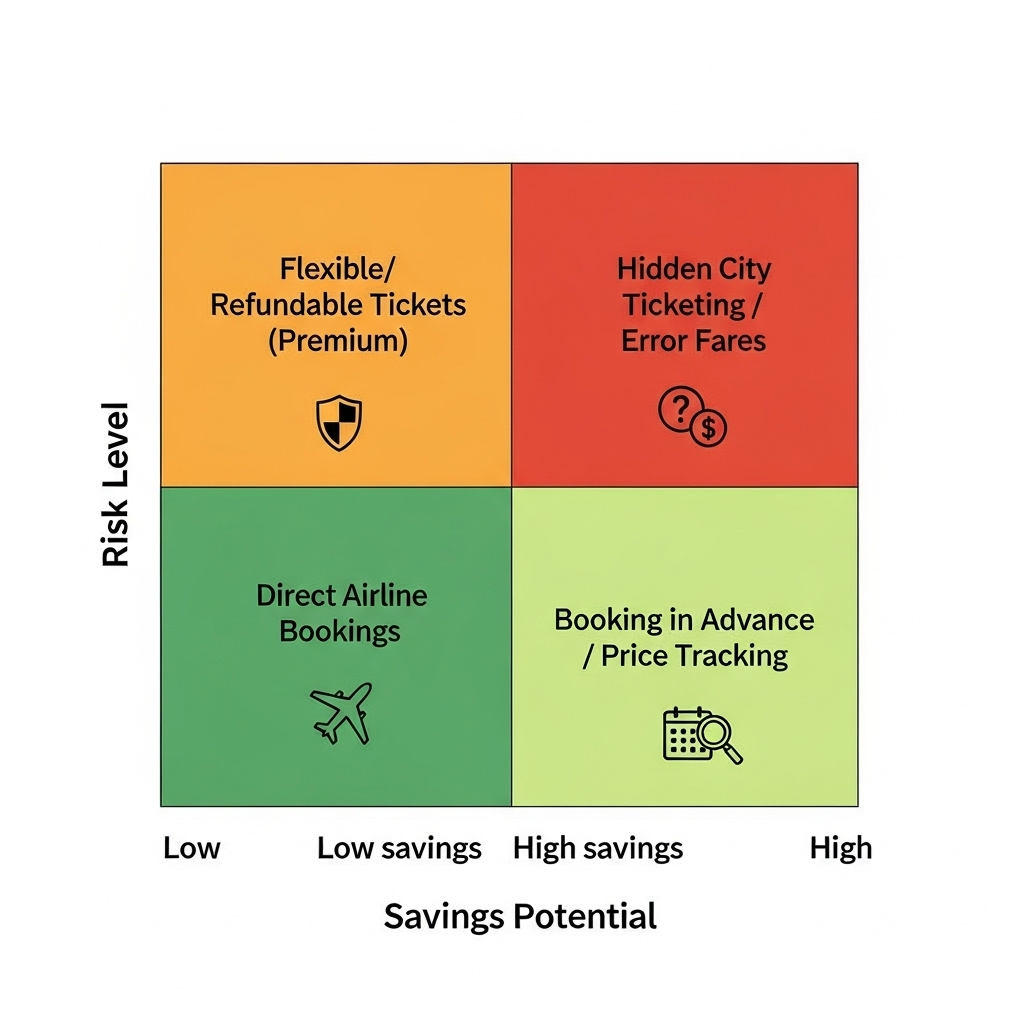
While the savings are real, hidden city ticketing comes with significant risks that every traveler must understand:
Airline Enforcement and Consequences
Potential Airline Responses:
- Account termination: Loss of frequent flyer miles
- Future booking bans: Blacklisting from airline
- Fare recalculation: Charging the difference
- Legal action: Rare but increasing
- Gate confrontation: Questioning at departure
Practical Limitations
When Hidden City Ticketing Won’t Work:
- ✗ Round-trip bookings (return gets cancelled)
- ✗ Checked baggage (goes to final destination)
- ✗ International flights (immigration issues)
- ✗ Tight connections (risk of misconnection)
- ✗ Partner airlines (different rules)
- ✗ Last-minute changes (schedule alterations)
My Personal Close Call
In 2022, I was questioned by gate agents about my frequent “missed connections” on United Airlines. While I wasn’t prevented from flying, my MileagePlus account was flagged, and I received a warning letter. This experience taught me the importance of diversification and discretion.
Legal Alternatives to Hidden City Ticketing

For those seeking savings without the risks, several legitimate strategies offer similar benefits:
1. Open-Jaw Ticketing
Book multi-city itineraries that accomplish the same goal legally:
- Fly into one city, out of another
- Often comparable prices to round-trip
- No contract violations
- Flexibility for exploration
Example: NYC → London, Paris → NYC might cost the same as round-trip to either city.
2. Positioning Flights
Use budget carriers to reach cheaper departure points:
Strategy Comparison:
| Method | Effort | Savings | Risk | Legality |
|---|---|---|---|---|
| Hidden city | Low | 40-60% | High | Gray area |
| Positioning | Medium | 30-50% | None | Fully legal |
| Open-jaw | Low | 20-40% | None | Fully legal |
| Error fares | High | 70-90% | Low | Fully legal |
3. Fifth Freedom Routes
Airlines can sell tickets between two foreign countries:
- Often 50% cheaper than competitors
- Completely legal and encouraged
- Unique aircraft and service
- Examples: Singapore Airlines’ NYC-Frankfurt route
4. Airline Bidding Programs
Many carriers offer legitimate ways to bid on unsold seats:
- Plusgrade upgrade auctions
- Last-minute premium cabin deals
- Standby programs for flexibility
- Student and youth fares
Strategic Implementation of Hidden City Ticketing
If you choose to use hidden city ticketing despite the risks, here’s how to minimize problems:
The Safe Approach System
1. Diversification Strategy:
- Rotate between airlines
- Use different email addresses
- Avoid frequent flyer programs
- Book through various platforms
- Limit to 2-3 times per year per airline
2. Booking Best Practices:
- Always book one-way tickets
- Use incognito mode
- Pay with different cards
- Avoid patterns
- Never contact airline
3. Travel Day Protocol:
- Arrive early (avoid rebooking)
- Never mention plans
- Act disappointed if asked
- Have backup story ready
- Document everything
Technology and Tools
Websites Specializing in Hidden City Searches:
| Platform | Features | Risk Level | Cost |
|---|---|---|---|
| Skiplagged | Dedicated hidden city search | Medium | Free |
| Google Flights | Multi-city tool (DIY) | Low | Free |
| ITA Matrix | Advanced routing | Low | Free |
| Kiwi.com | “Nomad” feature | Medium | Free |
| FlightFox | Expert assistance | Low | Fee-based |
International Hidden City Ticketing Considerations
International hidden city ticketing presents unique challenges and opportunities:
Immigration and Visa Complications
Critical Issues:
- Visa requirements for “final” destination
- Immigration entry/exit records
- Passenger manifests
- Security screening
- Customs regulations
Safe International Strategies:
- Only skip domestic segments
- Ensure visa compliance
- Avoid Schengen complications
- Consider one-way tickets only
Currency and Pricing Arbitrage
Sometimes booking from different countries yields similar savings legally:
Example Price Differences:
- US website: NYC to London $800
- UK website: NYC to London £450 ($580)
- German website: NYC to London €490 ($530)
This approach is completely legal and doesn’t violate any terms.
Airline Responses and Industry Evolution
The airline industry is actively combating hidden city ticketing through various means:
Technological Countermeasures
Airlines’ New Strategies:
- AI-powered booking pattern analysis
- Cross-referencing passenger databases
- Dynamic repricing algorithms
- Mandatory app check-ins
- Biometric tracking systems
Legal and Policy Changes
Recent developments in airline policies:
- Stricter contract language
- Increased enforcement efforts
- Industry-wide information sharing
- Lobbying for legislation
- Premium pricing for flexibility
Ethical Considerations and Community Perspectives
The ethics of hidden city ticketing remain hotly debated:
Arguments For:
- Airlines use predatory pricing
- Consumers deserve market choices
- Pricing shouldn’t penalize geography
- David vs. Goliath narrative
- Free market principles
Arguments Against:
- Violates agreed terms
- Increases costs for others
- Disrupts airline operations
- Unfair to fellow passengers
- Undermines route profitability
My Personal Stance
After three years of experience, I’ve moved away from hidden city ticketing toward legal alternatives. The stress and ethical considerations outweighed the savings for me personally. However, I understand why others continue to use it given airline pricing practices.
Success Stories and Cautionary Tales
Success Story: Sarah’s European Adventure
Sarah, a teacher from Ohio, used hidden city ticketing strategically:
- Saved $3,400 on five European trips
- Never caught or questioned
- Strict rules: different airlines, one-way only
- Invested savings in experiences
Cautionary Tale: Mark’s Miles Mishap
Mark, a consultant, overused the strategy:
- 15 hidden city tickets in one year
- Lost 200,000 United miles
- Banned from future bookings
- Had to buy last-minute expensive tickets
Future of Fare Gaming and Predictions
The landscape of hidden city ticketing continues evolving:
Industry Trends 2025-2027
Predicted Changes:
- Blockchain-based ticketing (harder to game)
- Mandatory final destination verification
- Dynamic pricing becoming more sophisticated
- Alternative pricing models emerging
- Increased legal enforcement attempts
Traveler Adaptations
Emerging Strategies:
- Cryptocurrency payment methods
- Decentralized booking platforms
- Cooperative travel groups
- AI-powered fare optimization
- Legal arbitrage techniques
Your Action Plan: Smart Savings Without the Risk
Recommended Legal Approach
My Tested 5-Step System:
- Monitor error fares (highest savings, zero risk)
- Use positioning flights (moderate savings, legal)
- Book open-jaw tickets (flexibility and savings)
- Leverage credit card points (effective 50-70% discounts)
- Try hidden city sparingly (if you accept risks)
Building Your Flight Savings Strategy
Monthly Routine:
- Week 1: Set fare alerts for dream destinations
- Week 2: Research alternative airports
- Week 3: Check error fare sites
- Week 4: Review and book opportunities
Tools and Resources Checklist
Essential Arsenal:
- Google Flights account with alerts
- ITA Matrix bookmarked
- Error fare alert service
- VPN for international pricing
- Spreadsheet for tracking
- Backup payment methods
Conclusion: Navigating the Gray Areas of Air Travel
Hidden city ticketing represents a fascinating intersection of technology, economics, and ethics in modern travel. While it can deliver substantial savings—often 50% or more—it comes with real risks that each traveler must carefully weigh. The practice exists because of genuine pricing inefficiencies and monopolistic behaviors in the airline industry, yet using it means violating contracts we agree to.
My journey with skiplagging taught me valuable lessons about the travel industry’s complexities. While I’ve personally moved toward fully legal alternatives, I understand why millions continue to use these techniques. The key is making informed decisions based on your risk tolerance, ethical stance, and travel goals.
Whether you choose to use hidden city ticketing or stick to conventional booking methods, the most important thing is understanding all your options. The airline industry will continue evolving, and travelers will continue finding creative solutions to access affordable travel.
Remember: the best deal isn’t always worth the potential consequences. But armed with knowledge and alternatives, you can still save thousands on airfare while sleeping soundly knowing you’ve made the right choice for your situation.